ALL FOR
SPEED
AND SIDECARS
Speed 5
Chapter 5: Fun on a Fanny Barnet
- John
Len was an apprentice house carpenter working for a Wigston firm Stimpson and Rolleston where he was paid double my pathetic wages at the factory. Len’s firm were building some luxury houses at Tilton on the Hill where Len had told me of a local Tilton man who was selling a Panther 600cc sloper outfit for 50 shillings (£2.50). Len had travelled from Wigston to Tilton on his firm’s bus and I rode over there later on the Bullet to view the Panther and to give Len a lift back home to LFE. I handed over the cash telling the man that we might be able to arrange some transport for the Panther outfit on Len’s firm’s low-loader. Some days later, before we could arrange transport, Billesdon Rural District Council arranged some transport of their own and took my Panther outfit for scrap as it had been parked on their grass verge in front of the seller’s council house for months despite the Council’s many letters asking him to shift it immediately. I didn’t return to Tilton and lost my £2.50. By the time we reached Wigston aboard the Bullet outfit, en route for LFE, it was getting towards dusk and I knew that the lights on the Bullet would not last to LFE and then back again to Wigston, so we stopped off at my parent’s house and I asked my Dad if he could run Len home in his car, which he did.
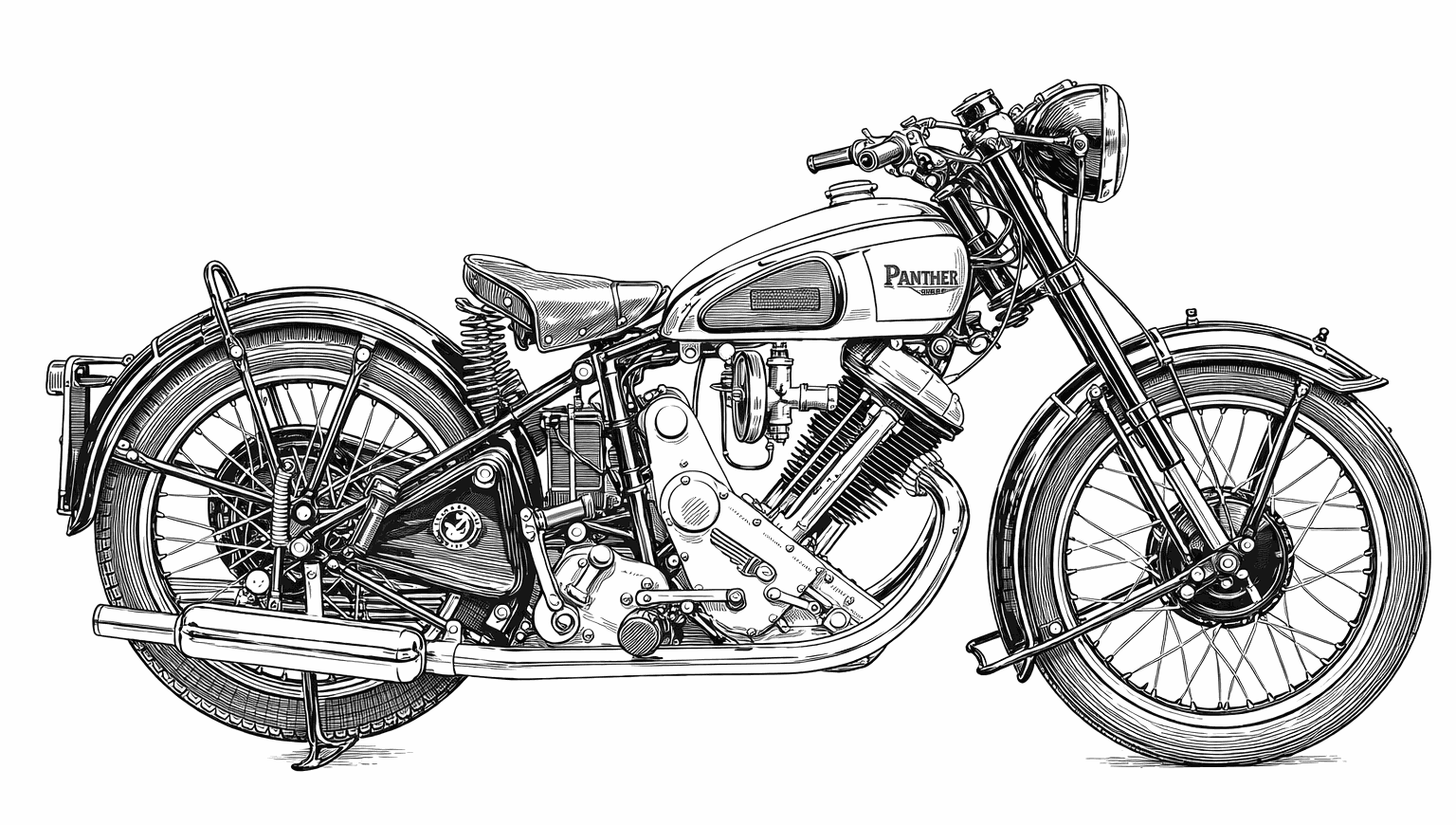
Properly cared for, that fifty bob scrap could be worth 1000x the price now. Who'd have known?
Once home Len showed me another of his bikes which he wanted to sell. It was a James Cavalier with a unit construction Villiers engine reputed to be around 200cc. Unusually the front of the bike frame was tubular steel, but the rear end including the swinging arm was made entirely from pressed steel with the two halves of the frame being bolted (loosely) together. My Dad offered to buy it for me, but after a test ride down Len’s street I said no way. Acceleration was extremely sluggish up to 20mph in second gear with the frame rattling like it was about to fall into pieces at any moment and the bike wandered all over the road. When I changed into third and opened the throttle it actually slowed down and presently coughed itself to a standstill. Scrap it Len!
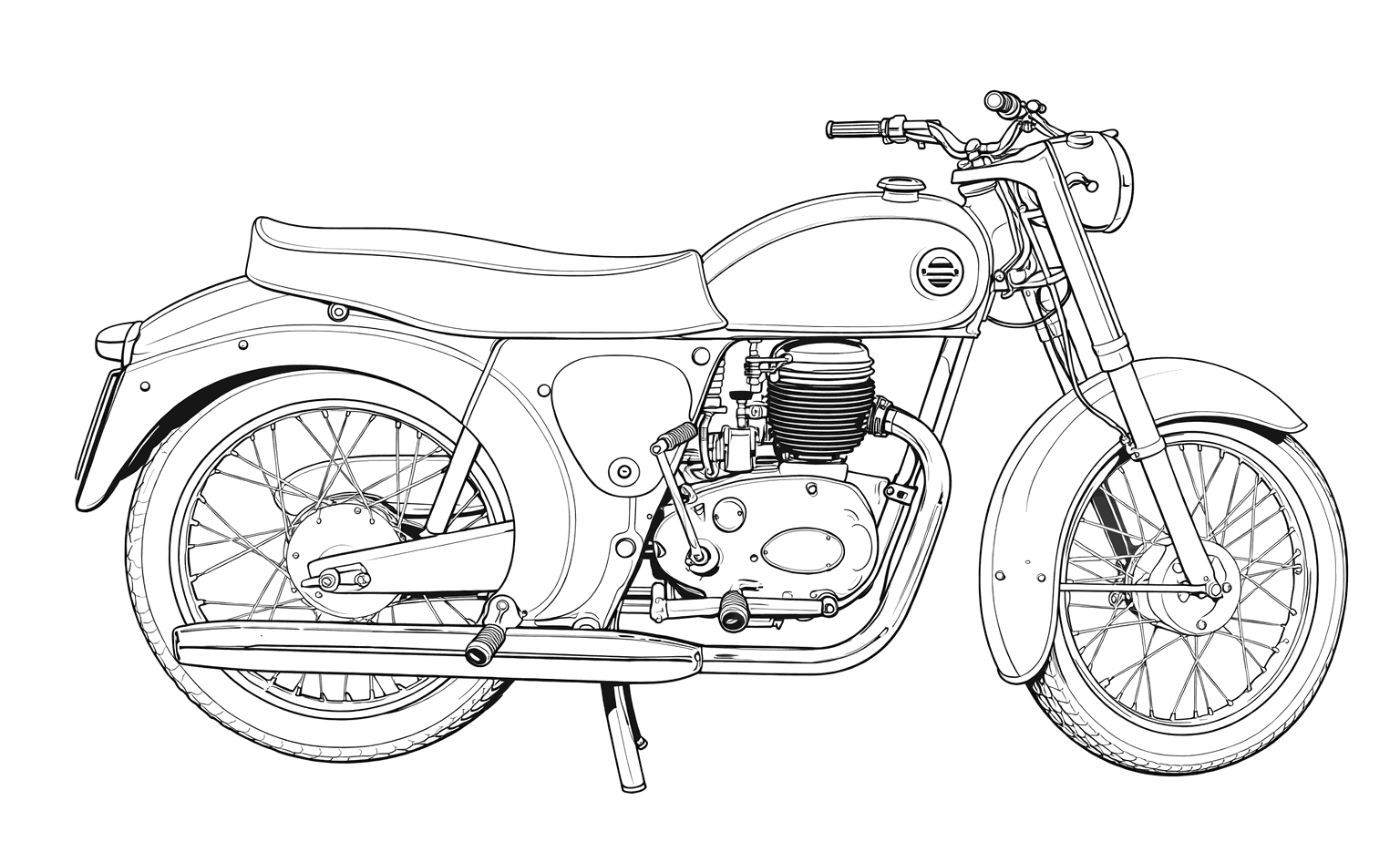
For reasons which escape me I decided to dismantle the Bullet to repaint the frame. For some time the Bullet engine and a Triumph Tiger 100 twin engine resided side by side on the floor of the built-in wardrobe in my Bedroom where I would sit and admire them from time to time. I must have been stronger then than now as I had carried the heavy lump of Bullet engine upstairs all on my own. Royal Enfield’s corporate motto was “built like a gun” and the Bullet engine was certainly solid, like it had been hewn from a block of metal. My mother complained that a wardrobe was no place for motorbike engines. (Each to their own mother).
Eventually I lost interest in ever reassembling and riding the Bullet as other bikes had entered my life by then. My father and my Uncle Mike, who had both asked for first refusal if I ever got rid of the Bullet were both suddenly no longer interested in buying it, so the engine and gearbox were sold for a fiver to Eros Motors and the rest went for scrap to Dobbo’s scrapyard. The Wobble Wheel chassis and its blanket box were retained for future use on another bike.
Francis Barnett 197cc
A former school friend Chris who was a little older than me and had passed his test on this 197cc Francis Barnett, had upgraded by buying himself a 350cc Velocette Viper. I offered to buy the Fanny Barnett from Chris but he was initially reluctant to sell it to me on account of quirky handling characteristics. I said “Listen mate, I have ridden a Tiger Cub!” at which Chris relented and the FB was mine for a fiver with three months road tax still attached. Chris warned me not to apply the brakes going round bends or the bike will throw you off. Len had gone with me to Chris’s on foot and Len accompanied me as I pushed the FB the mile from Orson Drive to my house where I arranged some third party only insurance for the bike.
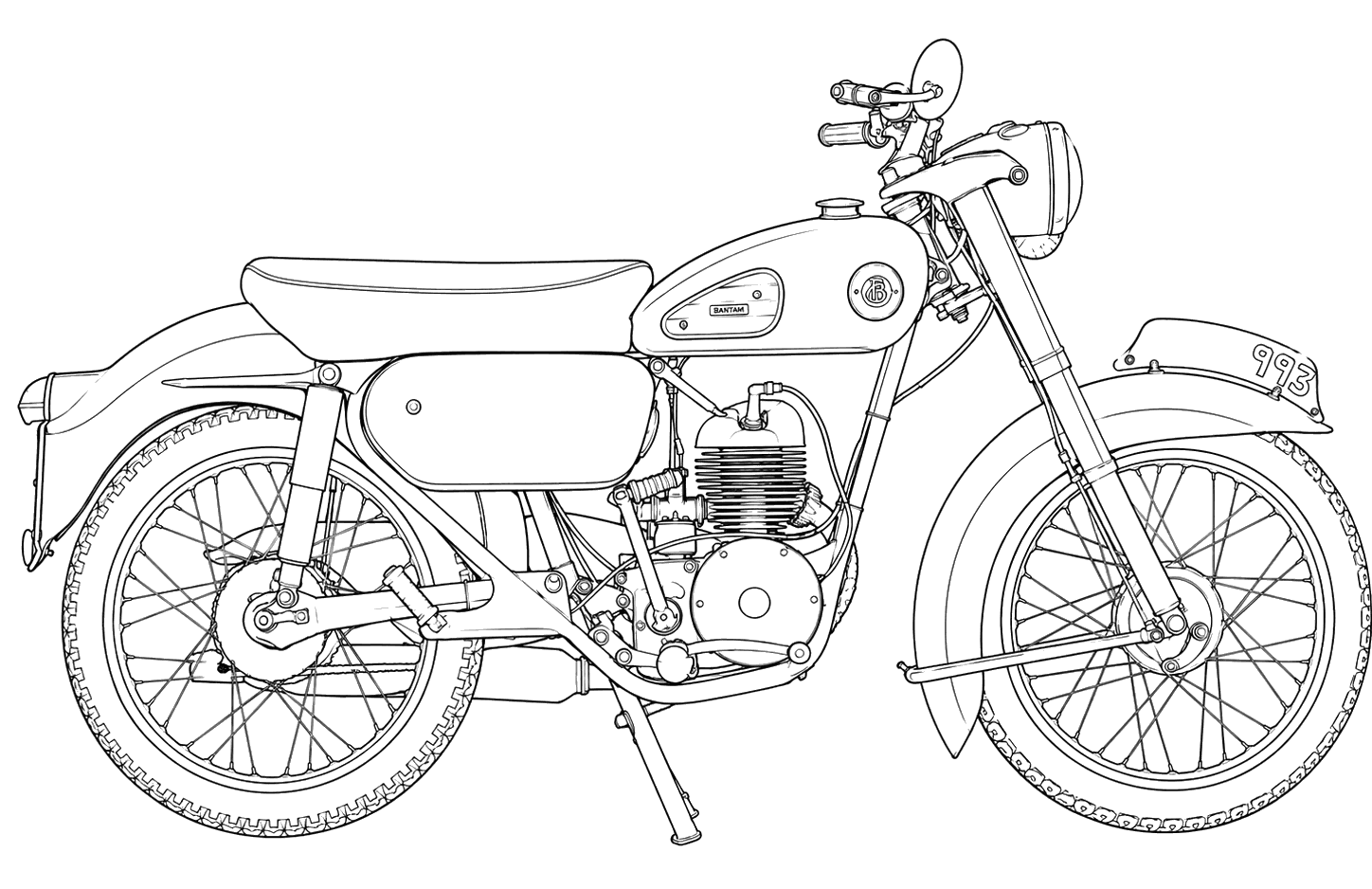
Villiers 8E/4 Single Cylinder 197cc Pre Unit Construction 2-Stroke Engine with 4-Speed Gearbox.
The Francis Barnett 197 was in fairly standard trim except that it had four gears as opposed to the usual three. The huge brass flywheel magneto with integral dynamo hidden beneath a round aluminium biscuit tin made the ignition reliable but lighting was “direct” with the brightness of the lights fluctuating according to engine revolutions. The bike had no battery. As with the Tiger Cub the bike had to be push started. I was never enamoured with Villiers own brand carburettors and preferred Amal’s. Top speed was 70mph which was better than the Tiger Cub. An acquaintance in Fleckney had a dark green Francis Barnett 197 with virtually the same engine but with three gears. I was disappointed that my four gears didn’t make my bike faster and was disappointed further that his bike seemed to handle better than mine and I never did discover why. We tested and compared the bikes riding at up to 70mph from Fleckney towards Wistow. Later, through misuse and possibly oil starvation, I managed to burn out the wet clutch on my FB and had to buy reconditioned friction plates from Eros Motors which had new cork inserts and were no bigger than a CD disk for half a crown (12½p) each. The crankcase was also tiny compared with the finned top end of the engine.
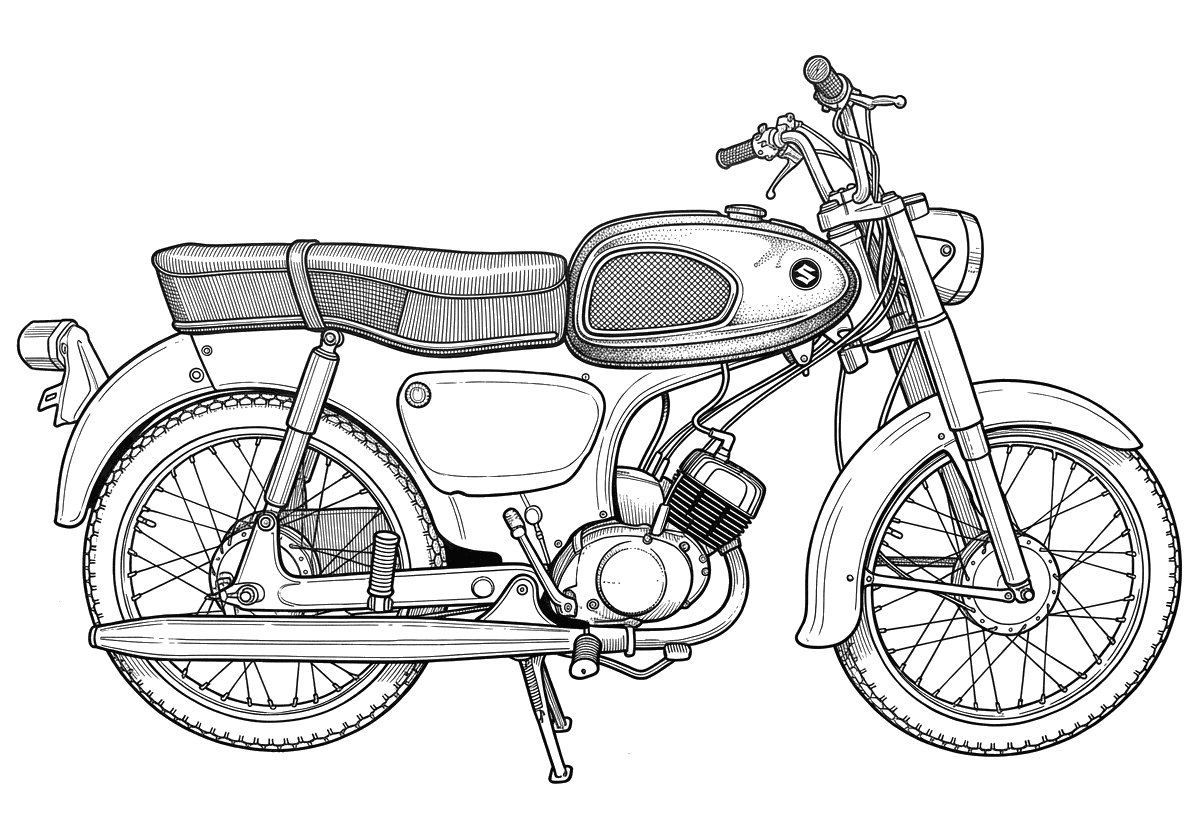
Around that time Len had bought a light blue 1964 Suzuki 80cc 2-stroke single for £15 because it needed a new tyre. The Suzuki 80 had a pressed steel frame, a high level exhaust system and four gears operated by a rocking gear pedal on the left hand side of the machine, all down (up) from neutral. I rode Len’s Suzuki 80 several times and as soon as I got used to not trying to change gear with the brake pedal and braking with the gear lever I found the performance remarkable for such a small engine capacity. Acceleration was superior to the Francis Barnett and top speed around the same. The reason for the excellent performance of Japanese 2‑strokes was entirely down to East German 2‑stroke technology. More of that later. The Francis Barnett was 2½ times the capacity of the Suzuki, but both were evenly matched on top speed, though the Suzuki accelerated and handled a whole lot better, plus it had a functional kickstart, plus lights and brakes which worked.
Len and I would exchange bikes as we rode out together in the evenings. Len introduced me to the ford which went through a stream on Watery Gate Lane between Earl Shilton and Thurlaston which we rode through one at a time at speed whilst kneeling on our respective dualseats to avoid getting wet legs. Then we exchanged bikes and rode through the ford again. Finally we rode through the ford from opposite directions and crossed each other mid stream creating much spray and the hiss of steam from the hot engines. We were 16 and still with a childish mentality. Tiny things etc.
After that we proceeded back over the A47 to Kirkby Mallory and Peckleton where we again exchanged bikes. I warned Len of the alleged problem of braking whilst negotiating a bend and he rode off in front whilst I followed on his Suzuki. At a location I have yet to identify on the map there was a sharp left hand bend followed immediately by a brick wall which may have been the parapet of a low bridge over a stream. Len as usual was travelling way too fast when he braked half way round the bend and as predicted the bike threw him off into the hedge. Len was unharmed and seemed to have enjoyed the experience judging by the grin on his face. However the front forks of my bike were twisted out of alignment with the handlebars. There was a gap between the post of a farm gate and the adjoining fence just wider enough to insert the front wheel of my bike. With a heave on the handlebars I untwisted the front forks to make the bike rideable once more. However that was not the end of the evening’s drama/entertainment as my silencer fell off and then Len’s engine died. The expressions of surprise on the faces of the passengers and driver of a Leicester bound Midland Red bus we overtook slowly on the A47 were a picture, with my bike making a terrible din whilst Len and his dead bike were being towed along with Len’s right hand holding onto my left shoulder. Len once towed me in a similar fashion with me on an ancient bicycle with rod operated stirrup brakes holding onto Len’s left shoulder as we rode from Glenfield to Kirby Muxloe past Glebe Farm. The road layout has since changed out of all recognition. We reached a speed of over 70mph when I had to let go and pull the bike up sharply just before the crossroads with Ratby Lane. 70mph was the fastest I had ever been on a pedal cycle.
In the early part of 1968 I rode the Francis Barnett back and forth from Wigston to Green Lane Road, Leicester where I worked at Wadkin’s woodworking machine factory. It was there that I made friends with Johnny Kampf who later swapped me his Ariel 350cc Ariel Red Hunter for my Francis Barnett.
Also on the milling section was a young Jamaican named Delroy McD’. Delroy had a 1960’s 250cc unit construction BSA C15 with a full fairing.
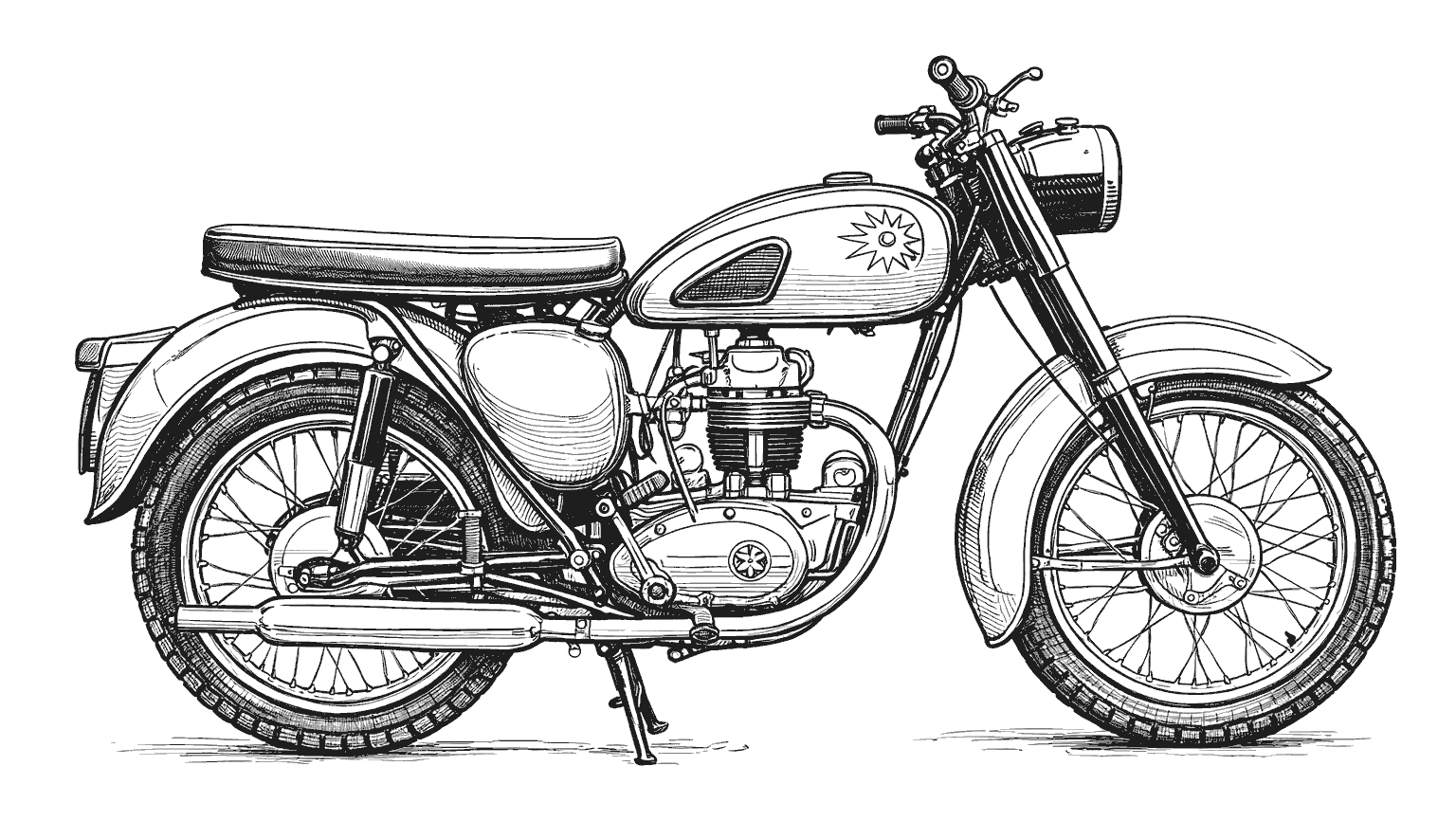
Approaching lunchtime it dawned upon me that I had forgotten the packed lunch which my mother had made for me. Delroy said “No problem, we’ll go to your house on my bike, pick up your sandwiches and return here. Delroy’s bike was finished in an unattractive metallic green but what it lacked in looks it certainly made up for in performance. We arrived at my parent’s house within 15 minutes and arrived back at the factory by halfway through the lunchbreak. Delroy had keeled the C15 over one way and then the other through the Mayfield Road/Kimberley Road/Beckingham Road S-Bends like a professional racer. He wasn’t mad, he wasn’t a chancer; he was just an incredibly good rider.
- John Ellis