Rear Observation
Looking Back over the Years
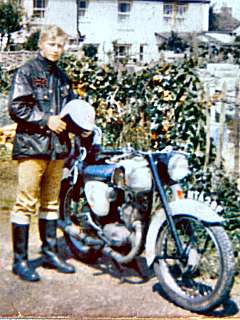
This is a survey to check if you followed all the fashions through the years. Don't think you can get away without confessing your youthful dedication to the latest motorcycle fads - I have the photos and they will be included here unless I hear from you.
This chart is updated as results come in. First in with a completed form was Dickymint - I sent an email update out about seven pm and his reply was time stamped at 5.40 next morning. Just going to bed I expect.
Tick the boxes for items you admit to as you go down the list. Add what we've forgotten at the bottom and remember to click the SEND button so we can add your scores.
Are there any items on the list that you have forgotten? Let me know any stories to help illuminate the items.
I acquired a love of the smell of Castrol R40 racing oil at Mallory Park as a teenager.
I bought a can and used to put a teaspoon in the fuel tank of my Raleigh Runabout just to replicate the delightful perfume.


- Mick Perry
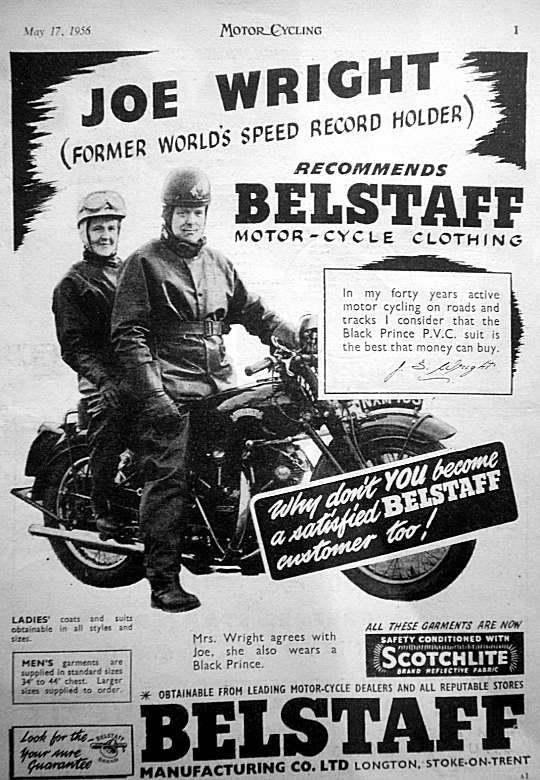
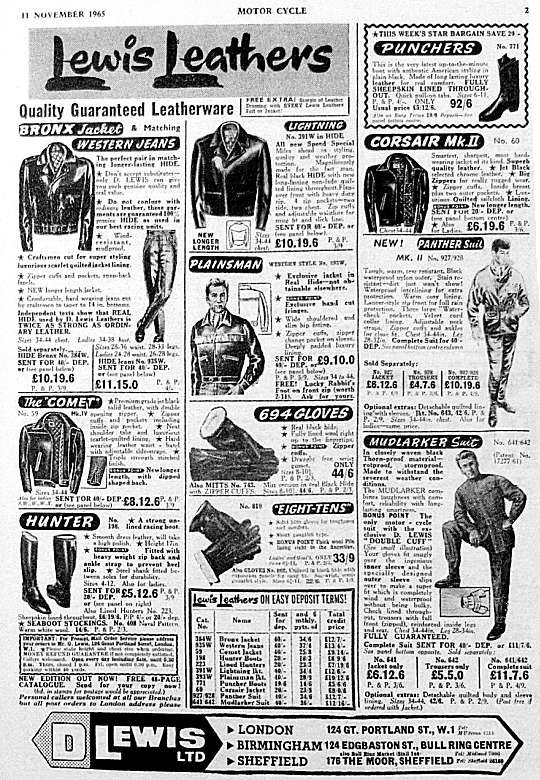
Adverts for the fashionable kit that you bought on in the hope that it would pull the birds. Pull the other one!
Pictures from Jean-Francois Helias.
At the 2019 Founders Day we had surveys from M Brooks, David Parry (not our Dave), John Muschialli (yes our Mush),Chris Alcock, Henry Richards (ex K&DMCC), Terry Hiron, Fred Hill (not that Fred), David Peterson, Ken Curtis, Bill Knowles, Trefor Jones and several anonymous geezers.
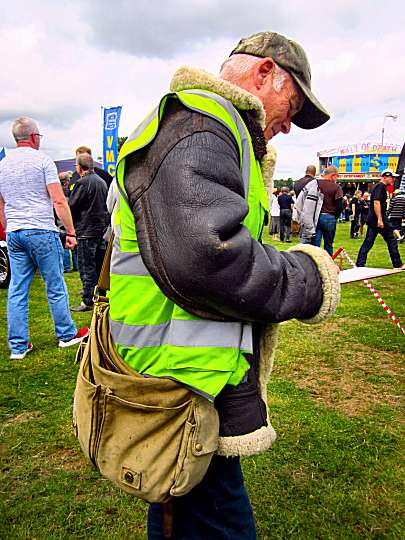
On the left: Not WW2 vintage but near enough to a gas mask bag to earn points.
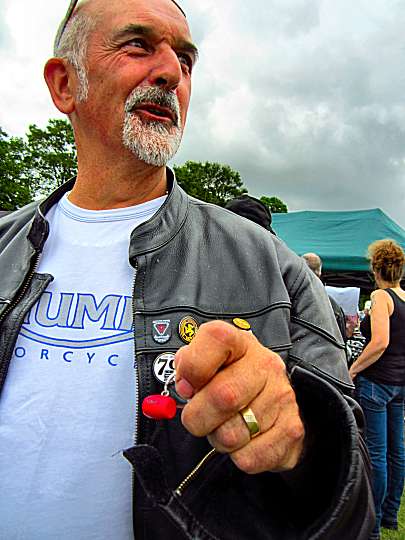
Over on the right: Henry Richards (MAG & Northants TOMCC) happened to have one in his pocket
Founders Day visitors also suggested rear sets and cut-off with badges - we have a special page for those! It looks like we should also include sheepskin flying jackets in July !
In the days before we were afflicted by global warming Keith Morben found another necessity was an RAF greatcoat.
Roland Potter suggests expansion chambers, Dunlop TT100 tyres and full face helmets.
Ian Bower recalls unlined, ex WD gauntlets, totally useless in the winter.
Trevor Bayliss lists Derri Boots, Lewis Leathers Twin Track Bronx Goldtop Trophy boots and an Aggordo lid among his favourites.
Simon White remembers being exhausted by an after market exhaust ...
The crappy Motad 2 into 1 for my GSX400T worked eventually with a baffle intended for a 750.
- Simon
David Gerrard added several gizmos that will bring a chortle of recognition from you ...
Front mudguard mascot - bolted on. I had a small plastic mouse that I fixed to every bike over the years.
As I could not afford nice handlebar muffs, or those MX stone protector hand guards, I cut down 2 gallon milk containers and tie wrapped them on. Looked naff, but kept the chill off the hands.
What else? I always carried 2 polythene rubble sacks in my top-box so I could wear them (cut down to fit) over my boots when the snow and heavy rain kicked in. My boots were not waterproof, and I slipped my boots into these sacks and gaffer taped them tight to stay on.
On my index finger was one of them "wee willy wipes" from Bob Heath - a rubber blade that you could swish yer visor with - but it was always too tight over the glove finger and cut me circulation off - I dumped it and just carried a bit of shammy which I kept stuffed between my clocks.
- David
Ken Horwood who admits to Derry boots and suggests leather face masks. I recall wearing one of them shammy lined face masks in the rain. It was like muff diving into damp panties. Yep, we'll vote for that!
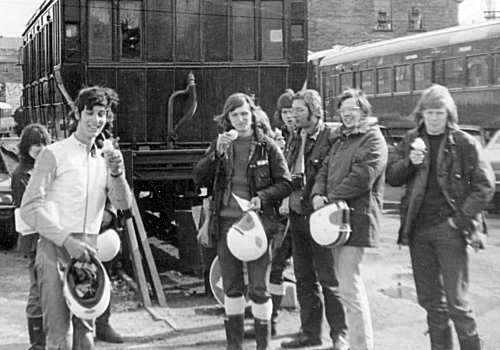
Richard Taylor still has his sea socks and they occasionally see the light of day over the top of wellies.
Derek Foster also had one of those deerstalker style helmets that he wisely kept quiet about - until now.
Mick Ayriss 'fessed up at last but only to items we can already see him wearing on pages in the galleries. Mick also suggests bubble visors and says he always wanted gauntlets with built in flashers (operated using finger/thumb contacts). Mick never got them. So don't sell yours on eBay - contact Mick through LPMCC.net and haggle.
Harley rider John Anderson was one of the few participants to admit to a Marples Must Go sticker. Many riders don't even know who Marples was ... or why he had to go.


Keith Raisin Morben suggests - Canister operated air horns - RAF greatcoat - Stars + stripes helmet - Stars + stripes peace fingers patch - Rolling Stones tongue patch.
Yep. Derek Foster and I shared a huge ex-WD greatcoat on the 1970 Elephant Rally.
(Not at the same time, we took in turns.)
Read about the twin airhorns on my Jet 80 sidecar.
Tony Graves adds handlebar muffs, essential kit for serious rallymen (with a Belstaff pocket full of clothes pegs to to stop the muffs filling with snow when the bike is parked).
Love handles. Two handles for the pillion passenger attached to a belt around the riders waist. I made one from an old Belstaff belt and two plastic suitcase handles before I ever saw them in the shops. Maybe I invented them.
- Russ Shand - The Black Russian
GrahamRallyist has suggested two army bags for panniers. That should strike a chord with many of you. Rivetted straps that broke under the strain. Holes in the back where the suspension units chaffed through. Everything inside wrapped in supermarket bags but still soaked by water thrown up from the back wheel.
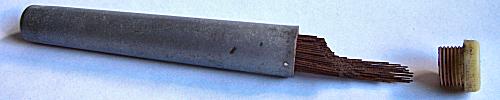
Crispy was the proud owner of a spark plug cleaner with steel rods in a tube. You screwed the plug in the end and shook it. Crispy wrecked many servicable plugs with this.
Red Barrel
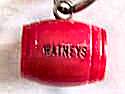
One of the first keg beers in the 1960s. The start of the rot brought to a halt eventually by CAMRA and slowed down at the time by the ridicule heaped upon it in a Monty Python sketch. The promotional keyrings were nice and chunky and ideal for attaching to zip pulls to assist zipping up using gloved hands. They were used on leather jackets and the zips on the back of motorcycle boots. Anyone still got one?
My dad had a Watneys Red key ring. He was a motor mechanic and sales reps used to give him freebies. My mother still has it with all my dads bits and pieces.
- Hayley Easthope
By the time I started riding a lot of the items on the list had fallen out of fashion.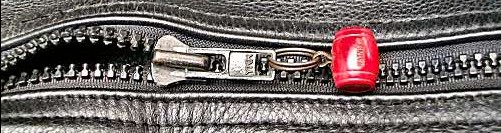
Anyway, above is a photo of my Red Barrel. My dad gave it to me when I first started riding in 1977 and it has been attached to each of my leather jackets since then.
- Ian Sargent
I can remember Red Barrel being introduced. The good thing, unlike many other beers was it's consistency in that you knew that it would at least be drinkable.
- Dave Cooper
Black Prince
grey days
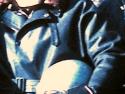
Typical rocker uniform was the black leather jacket (blj) but what works for the mid west climate of the Wild One is not practical for rainy England. One solution was the totally impermeable PVC suit known as the Black Prince. It resembled leather in just one respect. Colour. It had several problems. Although the material was waterproof the design did not have the care and quality of a waxed cotton Barbour or Belstaff so it could leak into collars and pockets. On cold days the material would become stiff as a board and on hot days the ... er ... water could not get out. Seams were sealed by welding using heat making lines of thin and brittle material that would soon split. The potential was there but it was not brought to fruition until Rukka brought modern soft metallic coloured PVC and good design to their range of suits, quickly followed by Belstaff in the early eighties.
Extra mark if you also wore matching PVC overtrousers.
Turbo Visor
a balanced view
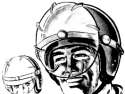
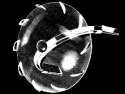
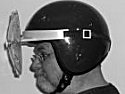
A dish shaped helmet visor with a bearing in the centre and vanes to make it rotate in the wind of forward motion. Bruce Gibson had one and noticed that at night all the other vehicles had comma shaped headlights. Therefore when I bought one I made sure to balance it. On one occasion I set off and the AJS was making a terrible sound so I pulled the clutch and killed the engine to see if it stopped. It didn't so I pulled up expecting a cycle part to be the cause. But the grinding noise continued when the AJS was stationary and even as I walked round it. All the noise was amplified through my helmet from a rusty Turbo Visor bearing. Later versions had nylon or bronze bearings. The idea faded when people realised that the wind that drives the vanes on the turbo visor is enough to blow rain off a normal visor and gravity also assists when stationary.
I remember those turbo visors. I tried one once - if the bearing squeal didn't detach your retinas, the gyroscopic reaction and wind pressure while looking right would twist your neck like an owl.
- Rob Winnett
The memories of the turbo visor are spot on; mine lasted at least one trip.
- Ken Wells
For more about this head-turning product, see the Addendum to the Early Dragon Snaps page by Jean-Francois Helias.
Corker Helmet
saving face
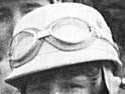
Motorcycle helmets have come a long way since the Corker helmet. This device was second cousin of a sola topi or pith helmet. It had an integral peak. A friend who rode a scooter had such a helmet. One night he fell asleep while riding home to wake face down being dragged along the ground by his scooter. By the time he came to a stop the Corker peak had worn to within ¼" of his nose but had saved his face. Who needs full face helmets?
My first plastic skid lid that replaced the cork lined pith helmet required the use of goggles. After trying the army surplus perspex and foam variety that froze to your face in winter and acted like a pair of woolen swimming trunks when wet, I moved up to the fighter pilot variety.
With a move up from my BSA Flying wheel to the mind numbing speed of the 125 BSA Bantam, I decided to invest in a leather face pouch that resembled Henry the 8's posing pouch. It was fine in summer but in colder weather the moisture generated by hot breath on cold leather gave you a first hand experience of riding around with a jock strap glued to your top lip.
God bless the first all enclosed goldfish tank with smokey visor that no one could see in through. It did have a disadvantage as, when the light was anything less than a sunny midday in Cairo, you where riding blind. You had to lift the visor which rather pissed one off when it was raining as you got home wearing a soaking wet bowl on your head!
- Eric Tindall
Method for testing a Corker helmet. Press gently in at the sides. If the sides meet the helmet needs to be replaced.
- Dave Cooper
Pudding Basin Helmet
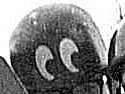
Appropriately named from the shape (the other version is unprintable). The leather trim and straps ensured a snug fit with goggle strap keeping out all draughts and wind noise yet allowing the rider to hear the rattle of his tappets. Incidentally, goggles were always pulled down round the neck when stopped, not up on the helmet where a) they could fall off, b) the strap stretched, c) the strap and shammy leather face piece soaked up all the rain water.
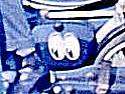
Mooneyes became the trade mark feature of short circuit ace John Cooper. Who can forget his epic Race of the Year combat with Giacomo Agostini at Mallory Park in 1971? I suspect mooneyes originated in American drag racing and were brought over in the mid sixties by 'Big Daddy' Don Garlitts for their first International Drag Fest. We saw them race at three or four venues including Poddington Airfield - since known as Santa Pod.
Plastic Chincup
Strange how a daft idea can gather momentum. These things were threaded onto perfectly comfortable helmet chinstraps to emulate the chinstrap position of a beat bobby (ah, remember those?) who wore it in that position so the helmet could come off easily without strangling them in a tussle with teddy boys. The effect was the same with crash helmets. In a crash they came off. So a law was drafted to insist the strap went under the chin. I think at one stage they actually manufactured helmets with two straps until the craze died down.
PVC Seat Cover
incontinent riding
When you throw a motorcycle down the road the seat seams often tear. Also the buckle on the heel of motorcycle boots can slash a seat if you don't cock your leg over quite right. The result is several inches of foam rubber eager to soak up rain and then squeeze it back out through your jeans when you sit on the seat. That is what makes PVC seat covers one of the most popular accessories.
The leopard skin patterned version was so popular and Tiger Cub seats so prone to splitting that at one time I thought they were original equipment. I think they were on some scooters.
Tassels
In the late 60s when good sense began to turn to weird ideas there was a fashion for attaching coloured strips of plastic to the handlebar ends. They were attached by poking a plug through the hole in the handlebar grip. Fortunately they could be stolen just by pulling them out so the craze didn't last long.
Ace Bars
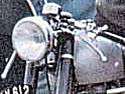
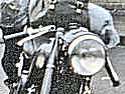
If you did not have tubular front forks that accepted the definitive boy racer clip-on bars then you could get by using ace bars or combination bars (U shaped bar with its own pair of mini clip-ons) OK for the ton up blast to the roundabout and back to the cafe but purgatory when dragging along in a traffic jam.
The ace bars came fitted to a year old 1960 Royal Enfield 250cc Crusader Sports. I had presumed that they were standard. The National Motorcycle Museum assures they were not.
- Dave Cooper
Ape Hangers
for gorillas
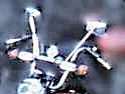
Another American idea that does not work well in this country where you need to make as small a frontal area as possible to avoid soaking up the maximum amount of rain.
Triumph (Meriden) thought they were going to be sued by an American who was badly injured after his handlebars broke off. But it turned out he had fitted after market ape hangers and put undue strain on the handlebar eye bolts.
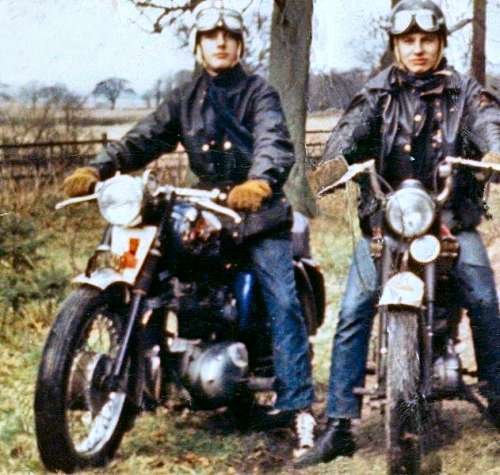
Or you could fit ace bars upside down. See Nigel Caddick's photo on the Golden Eagle rally report.
Oversize Forks
instability sold by the yard
Yet another Yank abomination for warm weather on lazy highways with large radius slow bends. Absolutely useless for scratching round the Peak District. Sometimes they got so long they flexed! Who needs suspension? My theory is that the fashion for torn knees on flared jeans came about so the folk who rode this type of bike with the ape hangers and feet forward position had a way of losing the wasp that was scooped up their trouser leg before it reached the parts other wasps shouldn't reach.
King and Queen Seat
one up one down
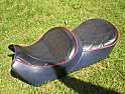
Really comfortable twin seat with a slightly raised pillion to allow the lady at the back to share the flies in the face experience. But when riding solo it made it impossible to slide back down the seat for an occasional flat out blast.
We still have a king and queen seat on the FJ1200 Mick got this year and very comfy it is. I bought this on eBay it cost me £103. When we first got it we went to York to see my daughter at uni. and we only stopped once.
- Hayley Easthope
Sidewinder
tricky as a rattler
When the club began there was no restriction on learner motorcycle riders but a 250cc limit was soon introduced. By the eighties the Japanese 250s such as the Yamaha LC were making that outdated so it was reduced to 125cc - unless it was fitted with a sidecar, on the basis that you cannot go fast with a sidecar attached. Wrong.
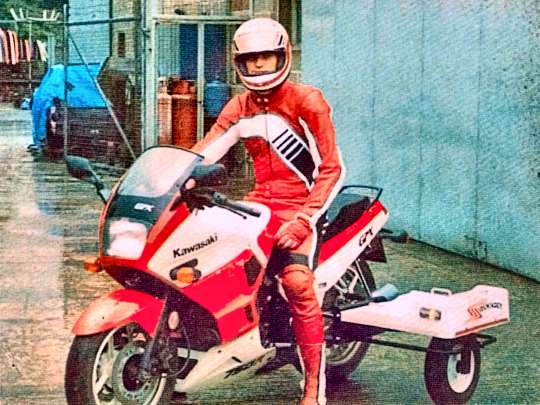
Might be true for the old double adult Watsonian but some bright spark brought out a lightweight leaning sidecar which bounced along touching the ground once every other lamp-post. There was a cartoon of Mr Plod inspecting a spotty youth's megabike sidepanel with a magnifying glass and admitting "Yes, it IS a sidecar."
Legshields
A simple way to keep feet and lower legs reasonably dry but eventually died out as fairings became the more stylish choice. Some bikes came with them as standard most notably the Velocette LE noddy bike and the Ariel Leader. Needed to be fitted right or they would cause havoc when cornering.
Sometimes the legshields were almost strong enough to double as crash bars (see below) and that gave the TRRL (now TRL) another of its ideas to save motorcyclists from themselves. While they were working on that TRRL also developed a mechanical antilock brakes system that stopped a disc brake locking the wheel on a wet road. When this was introduced to an incredulous group of riders at a presentation in Luton organised by the BMF everyone wanted to know when they were actually going to introduce a disc brake that WORKED in the wet!
An extra mark if your legshields were made from tin and you soiled your pants when you scraped them on the tarmac going round a fast bend.
Craven Topbox
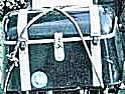
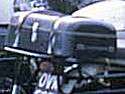
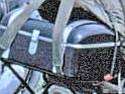
Panniers are the best way to carry luggage on a motorcycle. Sticking anything heavy high behind the back wheel is sure to make the front light and the steering to wave like a metronome. Therefore Ken Craven purposely made his top boxes quite small. But they were far too convenient for chucking all kinds of things into and eventually, against his better judgement, he bowed to consumer pressure and made a larger version. Other manufacturers jumped on the pillion with less ethical posture and made enormous coffins for the unwary. The double aluminium straps of the Craven box aided identifying the genuine article.
They also came with QD fittings that allowed them to be put to other uses.
Knotted Aero Elastic
hooked on rubber
Also known as bungee cords (hence bungee jumping) these were a compulsory Christmas gift for every rider. Difficult to hook where you wanted it and almost impossible to pull off without it clinging to every spoke and mudguard stay on the way. There was a contagious skill in making the cord exactly the right length to provide optimum tension by tying knots on the elastic. The knot then became permanent and would spawn baby knots further along the cord.
Sea Socks & Wellies or Boots
turned down again
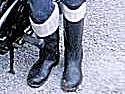
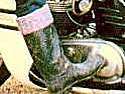
Well, if the socks are longer than the boots what do you do with the sticky out bit that is too bulky to go inside the boot? Turn it down over the top.
This serious clubman trademark gathered its own momentum so that you could actually buy false sock tops in the colours you wanted such as Star Rider brown and orange. OK, I admit it.
The Corby and Kettering MCC actively discouraged this in the eighties when it had become a signature for old farts and they were trying to attract younger members.
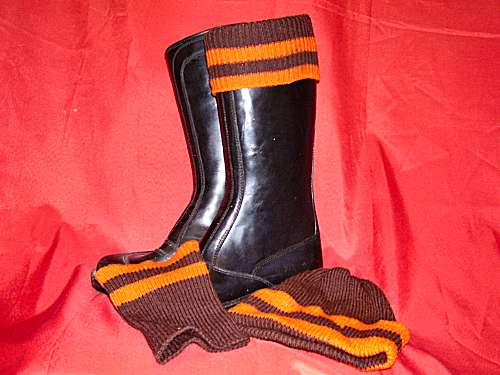
The socks were worn under a pair of black sheepskin lined leather high boots with zips up the back. (Same length as the pair shown in the photos.) A combination of sheepskin, sea socks & hot weather meant that the boots could become high in another way.
- Dave Cooper
We used to buy our Russian wellies from Leicester Cattle Market for 10/- (50p) a pair. They were stiff, didn't have agricultural treads and were a nice shiny finish.
In later years the Russian boots became unavailable and were superceded by Derri Boots, starting with the traditional soft tie top versions. Dave Cooper mentions them in his 2009 Rallymans report and has a link to where they can still be obtained.
Derri Boots have come up in conversation a couple of times lately with people wondering if they are still about. A lot of the Shakespeare MCC used to wear them on a regular basis.
I wore them once on a Shakespeare MCC trip to the 1982 24 hour Le Mans bike race. It was a sleeting when I left home so I donned the Derri Boots and did not bother taking any other footwear. We moved further south after the race and the weather warmed up. On our arrival home it took a week for my feet to de-crinkle.
- Dave Cooper
I still have my second pair of 'motorcycle' design Derri Boots. The first pair became brittle through heat and oil and cracked on the gearchange toe. I repaired it on half a dozen occasions by sticking patches over it and suffering one wet foot.
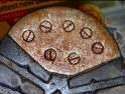
The part that took the most wear was the heels. I cut heel plates from mild steel and screwed and araldited them in place. The same heel pieces were moved to my second pair. Occasionally I forget and end up on my arse on a stone floor.
I bought a pair of Derri Bootslast year 2022 from a well-known website that shares it's name with a rainforest.
The boots look more like a proper boot now, not like a futuristic 'space boot' off Blakes-7.
- Ian Shaw
White Silk Scarf
Biggles Flies Undone
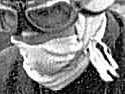
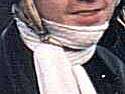

Not a bad idea to have a Red Baron scarf because the thin silk sealed the neck without strangling the wearer, was reasonably warm in winter and not too hot in summer.
Needed (but never received) frequent hand washing to remove road dirt and transposed wax from the Belstaff.
Also available in, for some reason, less popular black. Maybe the dye came out into your neck and you didn't know until your mum told you.
Yellow Rayon Scarf
round the old oak tree
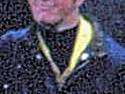
Theory was that anyone displaying a yellow scarf on the handlebars of a parked motorcycle was advertising a need for help from other riders. The BMF produced a yellow rayon scarf to fit the purpose. At the time (60s) we always stopped for a fellow rider who would adequately signal distress by having an inner tube hanging from the handlebars or the inside of his engine scattered over the ground. These days it is left for AA Relay.
I still wear my yellow rayon scarf, though a bit chewed now, outlasted a lot of bikes I should imagine! Derek Jordan (Dougal) was only mentioning a while ago the longevity of said items. We must be sad bastards discussing old mufflers.
- John Ashworth
Beer Towels
last orders for scarves
Terry towelling scarves are good for absorbing water, ask any baby. Popular colour was red. The same material is used on promotional towels on bars to catch beer drips. A couple stitched end to end make an ideal scarf and carry the message that when your ain't riding you are in the pub.
Volunteer Emergency Service
the big drip
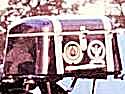


There must be some information of this idea that captured the imagination of rockers everywhere.
Theory was that if there was a need to quickly transport blood from one hospital to another they could call on registered (and trained?) volunteer motorcyclists for the job.
My Eye and Pigs Would Fly.
The VES was a country wide organisation and worked very well. Local organiser had a motorcycle shop in Wigston.The first time I had a call out from work, on return I was summoned to the bosses office and asked what it was all about. After I had explained I was told that when I was out doing VES jobs the firm, Lawrence Radiators, would pay me. Did a lot of blood and organ drops, but the most scary was guiding ambulances in the fog, and there were a lot of those kind of jobs. If you were doing a very urgent job, very often the police would meet you and give you an escort to your final destination.
Happy Days, don't know why we are still alive.
- Ken Wells
Marples Must Go
not by train
Ernest Marple was Minister of Transport when it was really a Ministry and not just a deparment with other priorities. This was the time when the 250cc restriction arrived, MOT tests were introduced.
Railway lines and stations were closed and motorways began to criss-crossed the country, built by .... Marples Ridgway
Crash Bars
not breaking into pubs
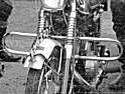
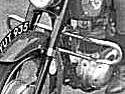
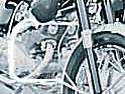
Fitted on the under-standing that if you dropped the bike at any speed you didn't want to get your leg trapped between road and bike. Likely as not these things would actually trap your leg in that position when anyone without crash bars would have long since safely separated from the sliding bike.
For good measure you could also fit matching rear crash bars to ensure that neither you nor your pillion escaped.
No points for smaller modern engine protection bars.
I remember one guy fitting rear crash bars to the top and to the bottom of his rear suspension units so converting it to a rigid back end. He didn't even notice until we pointed it out to him.
- The Black Russian
Badge Bar
for handicap racers
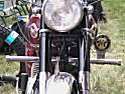
Close to being a crash bar but usually a single chrome bar bolted through the sidecar lug on the front downtube. First time the bike fell over it would hopefully break off or bend. Otherwise you could end up with a bent frame.
Fog and Spot Lamps
keep warm on the wiring loom

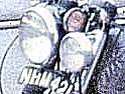
Hands up if you had a battery sapping spot lamp with a blue spot in the middle. Or a yellow broad beam fog light that you could never really tell if it was on or not.
Steve White once had the brilliant idea of fitting a small lamp on his rear carrier to illuminate the fluorescent bib and reflective sam brown across his back. Must have made rear observations confusing.
Stone Guard
a chip off the old block
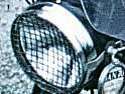
A chip-fryer mesh that was fixed over the 7" headlamp to protect the glass from large chips thrown up by the rider in front. Also available as a concave version to cover the peculiar 'self cleaning' shape of the Cibie headlamp that gave a bit of extra illumination to 6 volt electrics before all the bikes changed to 12 volt alternators and quartz iodine (halogen to you sonny) bulbs.
Headlamp Cover
mobile fly paper
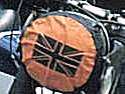
Handy for keeping summer fly swat off the 7" headlamp glass. The fluorescent material also gave an eye catching glow to the frontal aspect of the approaching motorcycle. That probably attracted even more insects to spread themselves on the cover so that when night fell they would all end up inside your Belstaff pocket when the cover was removed, folded and put there.
Goldie Silencer
whistle while you work
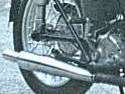
As a tribute to the class of the BSA DB34 a pattern goldie exhaust graced many strange motorcycles. Like the rest of the Gold Star the silencer is classically proportioned. For the addition to be completely successful it should emit a distinctive whistle to the exhaust note on the over-run.
I had a swept back pipe to go with my goldie silencer. Shame it was on a C15 and not a DBD 34
- Ted Trett
Dunstall Megaphone
the sound of the sixties
Because of its race track background the megaphone exhaust graced many bog standard road bikes as a cosmetic brag. Dunstall made a civilised version that did not result in the neighbours throwing half bricks at you every time you started your bike.
Turnout
nice again
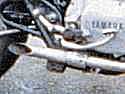
The nearest thing to not having a silencer at all this pipe was usually short and cut off or bent out at an angle. If you fitted one of these it was usually necessary to jet up the carburettor by half a dozen sizes to avoid a hole in the top of a piston. You would also be relegated to tail end charlie on club runs.
Gas Mask Bag
needed after beans
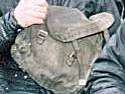
A specific variety of exWD canvas bag. Square in proportions with two brass press studs on the flap and subdivided internal compartments. Supported over the shoulder by a broad canvas strap the bag could be held tight to the body by a piece of string wrapped round a large metal button. The kind of thoughtful war-time design that might have won a Design Council label if it was done in the sixties.
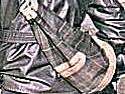
Not long after duffle coats became the hippy wear of choice along came the duffle bag, also loosely based on navy wear. Tube shaped and with a combined drawstring and shoulder strap. They were usually pvc lined fabric to provide some stiffness to the shape and waterproofing. In other words, rain that entered through the neck stayed in the bottom. Still a fashionable choice for beachwear.
Anything Cheap and Rude
that you bought at the seaside
Every trip to the seaside involves drinking beer, eating candyfloss and cockles (together) and buying something cheap and rude from a stall on the promenade.
Not giving any points for the brilliant postcards with red-nosed men, big wives and scantily dressed beach belles.
To get a point here you have to be able to recall something tastless that didn't survive the motorcycle ride home, and I don't mean the tart you picked up at the fairground!
Parkas & Lots of Lamps
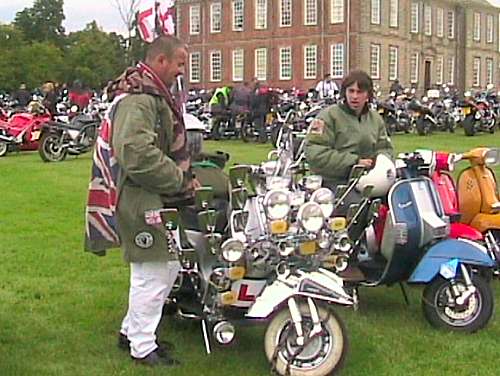
Taken at Stanford Hall on Founders Day 2009.
If you had a target or an RAF roundel on the back of your parka you get an extra point. Subtract one for a Saint George/Andrew flag and no score at all for colours!
Another fetish among the mods were furry tails. You get a point if you had one or more of these dangling from your parka or scooter but not if you grew it yourself.
Fitting lamps to scooters was some kind of in-joke. If the battery ever had enough power to light them all I think the scoot would have been propelled backwards. Never-the-less, they were a part of the culture and you get a well deserved point regardless of whether you ever switched them on or not.
Recent Fads
Greeks and Romans had horsehair and feathered plumes. Vikings decorated their helmets with horns and wings. These days the lads stick furry ears to their helmets. If you admit to this you get a point. I don't get the point.
Our generation never had to suffer the indignity of peeing onto the acetylene to keep a light shining. These days motorcycle lights are small and piercingly bright and usually adjusted to blind other road users even in the daylight. To add to the confusion the bulb can be tinted to contain a touch of colour at the edges. You don't get a mark for boring blue but you do get the mark if it is a really butch pink .
Not sent your score in yet? Shame on you!
This survey is also available in a printable format. Print some out and ask your buddies to fill them in. Then send the results using this page.
Excellent read. I just passed this onto a colleague who was doing some research on that and he actually bought me lunch as I found it for him
Therefore let me rephrase that: Thank you for lunch!
